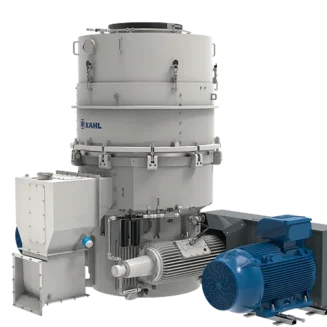
How Ennstal Pellets cut energy consumption while increasing output
For wood pellet producers, the real benchmark of a pelleting system is measured over years of operation: energy consumed per ton, uptime under continuous load, and how efficiently every kilogram of raw material is converted into saleable pellets. That is exactly why Ennstal Pellets chose to replace its previous ring-die technology with an AMANDUS KAHL flat-die pelleting line.
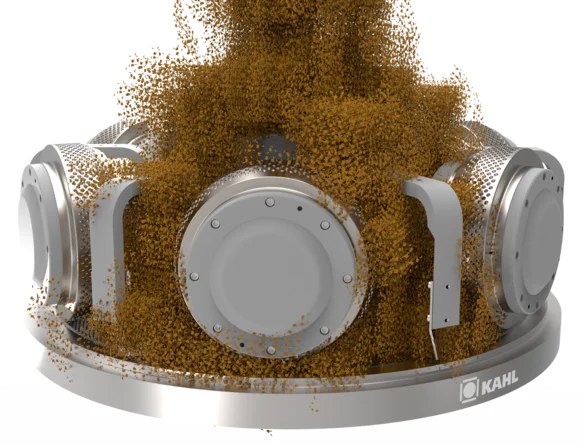
Lower energy demand, higher production efficiency
The decisive advantage came from process simplification. KAHL’s flat-die system eliminates dry grinding before pelleting — one of the largest energy consumers in conventional wood pellet production. This reduces electricity demand by up to 35 kWh per ton, while total energy use drops to just 40–45 kWh per ton of softwood pellets.
At the same time, output rises significantly. With KAHL’s Eco Roll technology, Ennstal Pellets achieves up to 25% higher throughput, creating a rare combination in pellet manufacturing: lower operating cost and increased production capacity in the same line.
Proven in practice, valued by the operator
What makes this case especially credible is the customer’s long-term operational experience. Ennstal Pellets is not describing a theoretical performance promise, but measurable gains achieved in daily production.
Managing Director Rupert Klausbauer summarizes the benefit clearly: “The quality of the pellets is excellent, and energy consumption is significantly lower than before.”
For pellet manufacturers evaluating new milling technology, this project highlights what best-in-class pelleting increasingly means: stable premium pellet quality, maximum raw material utilization, and a process design that turns every saved kilowatt-hour into competitive advantage.