Grinding wet wood without the energy penalty
In wood processing, size reduction is often where efficiency is lost. Conventional hammer mills rely on impact — fast, aggressive, and energy-intensive — especially when handling wet or fibrous biomass. The result is a familiar trade-off: high energy consumption, complex dust handling systems, and inconsistent particle structure.
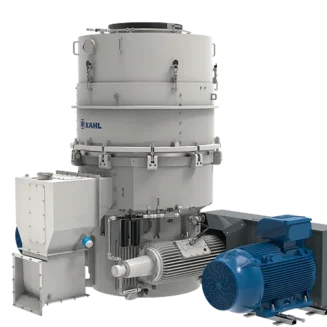
The KAHL pan grinder mill approaches this step differently.
A different grinding principle for wet biomass
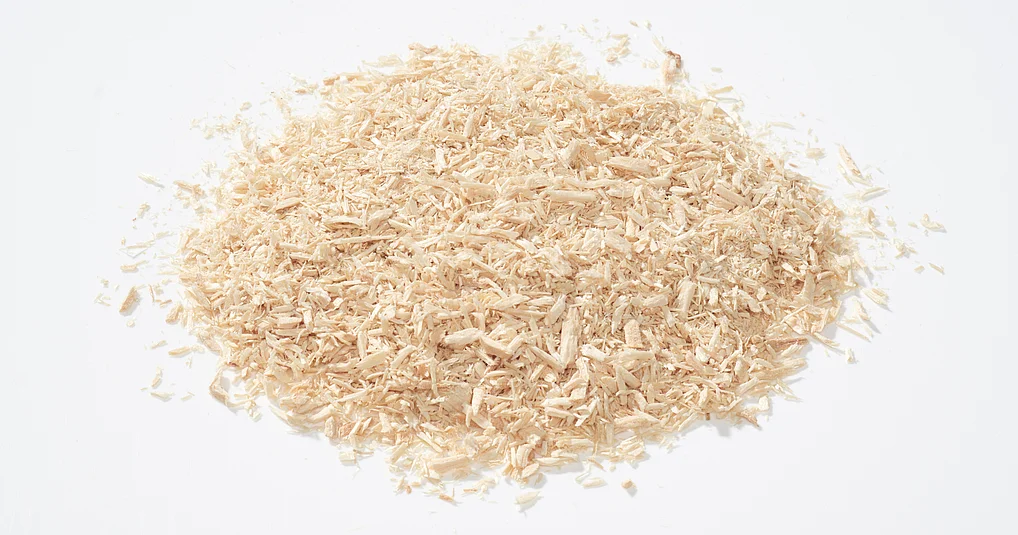
Instead of impact, the system uses a compressive grinding action between rollers and a die. Wood chips, shavings, or sawdust are defibrated across the fiber direction, producing a more uniform particle structure — even when moisture content fluctuates.
This matters particularly for wet raw materials. Where traditional systems struggle, the pan grinder mill is designed to handle biomass with higher moisture content without pre-drying, maintaining stable throughput across varying feed conditions.
Capacity scales from a few hundred kilograms up to 40 tons per hour, making it suitable for both pilot-scale operations and large industrial pellet plants.
Simplifying the process, not just improving it
What makes this solution stand out is what it removes from the process. The pan grinder mill operates:
- without aspiration systems,
- without cyclones or filters,
- without complex exhaust air installations.
In many applications, it can even eliminate the need for a downstream hammer mill altogether, reducing both capital investment and operational complexity.
The impact on energy is significant. By avoiding dry grinding stages, operators can reduce grinding energy demand by up to 50%, while also simplifying plant layout and maintenance.
From crushing step to system advantage
For operators, the implication is clear: grinding is no longer just a preparatory step before pelleting — it becomes a lever for overall plant efficiency. Lower energy consumption, fewer auxiliary systems, and a more consistent particle structure directly improve downstream processing stability.
In wood and biomass processing, the most competitive plants are increasingly those that remove unnecessary steps. The pan grinder mill is a clear example of that shift: not a faster version of the same process, but a fundamentally simpler one.