Grinding sugar takes more infrastructure than factories expect
Grinding sugar into fine powder sounds straightforward—until the surrounding equipment starts taking over the plant.
In many conventional sugar grinding installations, the mill itself is only part of the equation. Filters, fans, cooling units, explosion protection, ducting, and auxiliary systems quickly expand the footprint. For manufacturers trying to bring sugar processing capacity inside existing factories, that supporting infrastructure often becomes the real bottleneck.
That is exactly the situation Puratos Chile set out to avoid when selecting the Sugarplex SX from Hosokawa Alpine.
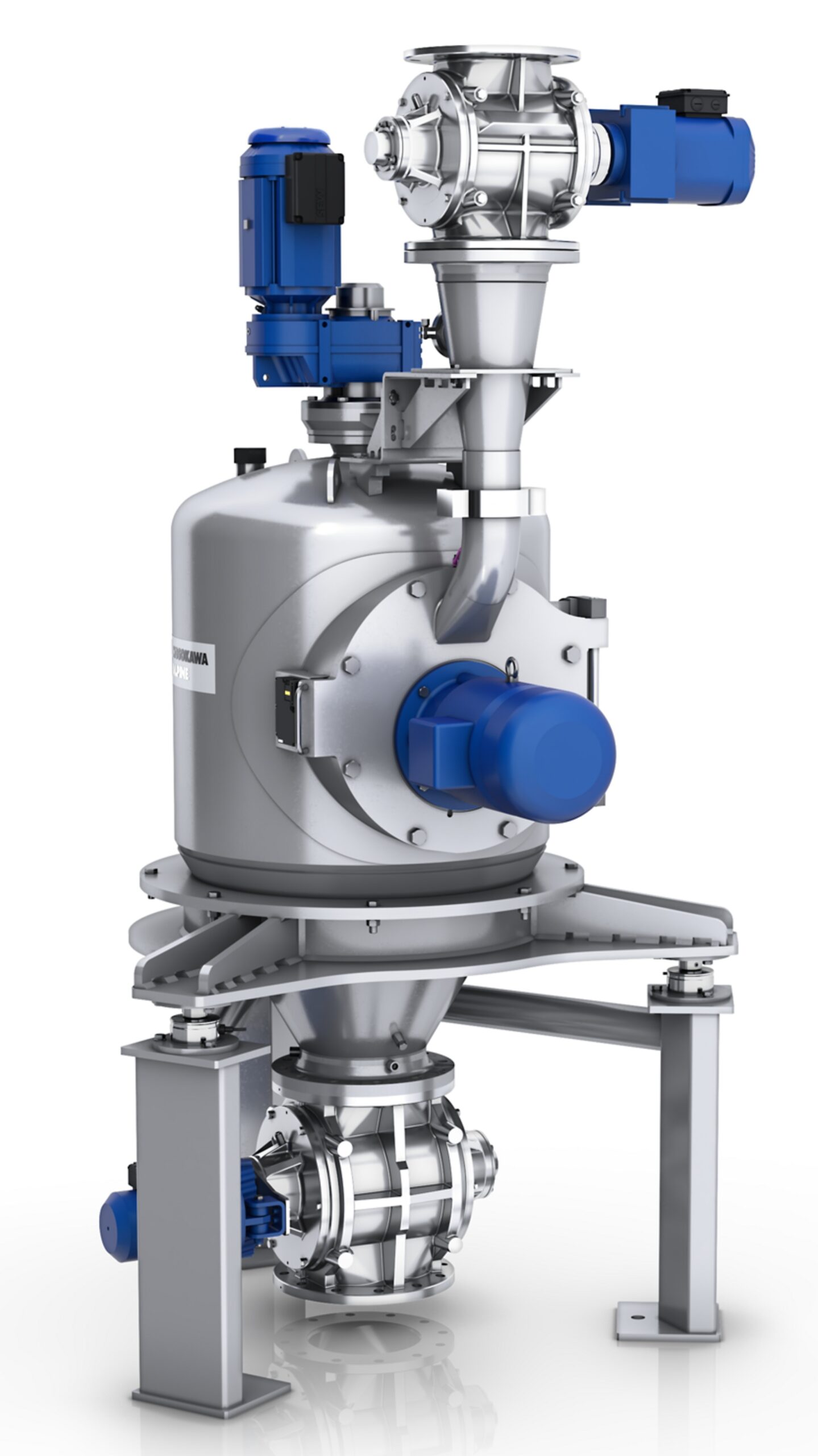
Compact design changes the economics of sugar grinding
What makes the Sugarplex different is not simply its grinding performance, but how much process equipment it eliminates.
Unlike traditional sugar milling systems, the Sugarplex SX integrates grinding into a compact closed design that does not require separate filters, fans, or external cooling units. That changes the entire plant equation. Less auxiliary equipment means less floor space, fewer installation interfaces, simpler cleaning, and lower maintenance burden.
For Puratos Chile, this compactness created practical flexibility. In the customer case, Operations Manager Sergio Landeta emphasizes that the Sugarplex enabled the company to expand into new markets while still meeting demanding internal safety and production standards.
Fine sugar requires more than fine grinding
Sugar becomes technically demanding the moment particle size decreases.
As sugar is milled into finer fractions, dust explosivity rises sharply. This makes explosion protection essential, especially in food plants where fine sugar powder is handled continuously. The Sugarplex SX addresses this with ATEX-compliant construction suitable for explosive sugar dust environments, combining fine grinding and explosion safety in one enclosed system.
At the same time, the performance envelope remains industrially significant. The Sugarplex 315 SX achieves approximately 2.8 tons per hour at 99% below 450 microns, and around 1 ton per hour at 99% below 125 microns—covering the fineness ranges needed for bakery, confectionery, and powdered sugar applications.
Fewer components mean more control
In powder processing, every additional component adds complexity.
Each extra fan, duct, filter, or cooling unit introduces more cleaning points, more maintenance demands, and more potential downtime. That is why integrated systems like Sugarplex are increasingly attractive: they reduce not only footprint, but also operational variables.
Related equipment
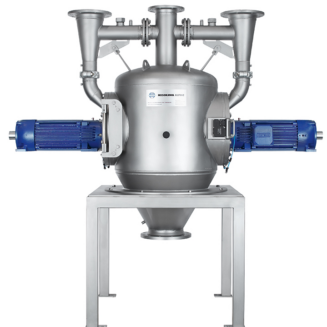
Fine sugar grinder
Developed especially to meet the requirements of sugar grinding, it is also suitable for similar applicati...
Sugar grinding and recrystallization system
Optimize your sugar production with a system that integrates grinding and recr...
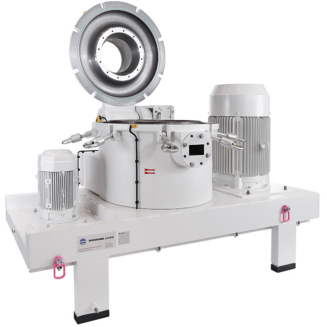
Air classifier mill
Suitable for the comminution of numerous products and it's utilized in every branch of industry. It is al...