Stabilising cocoa powder before it leaves the line
If cocoa powder leaves the line unstable, the problem doesn’t show up immediately—it shows up later, in storage. Lumps, colour variation, complaints. And by then, it’s too late to correct.
As described in practice by Probat, stabilisation is not just cooling. It’s a controlled crystallisation step that needs to happen directly after grinding.
From grinding heat to controlled crystallisation
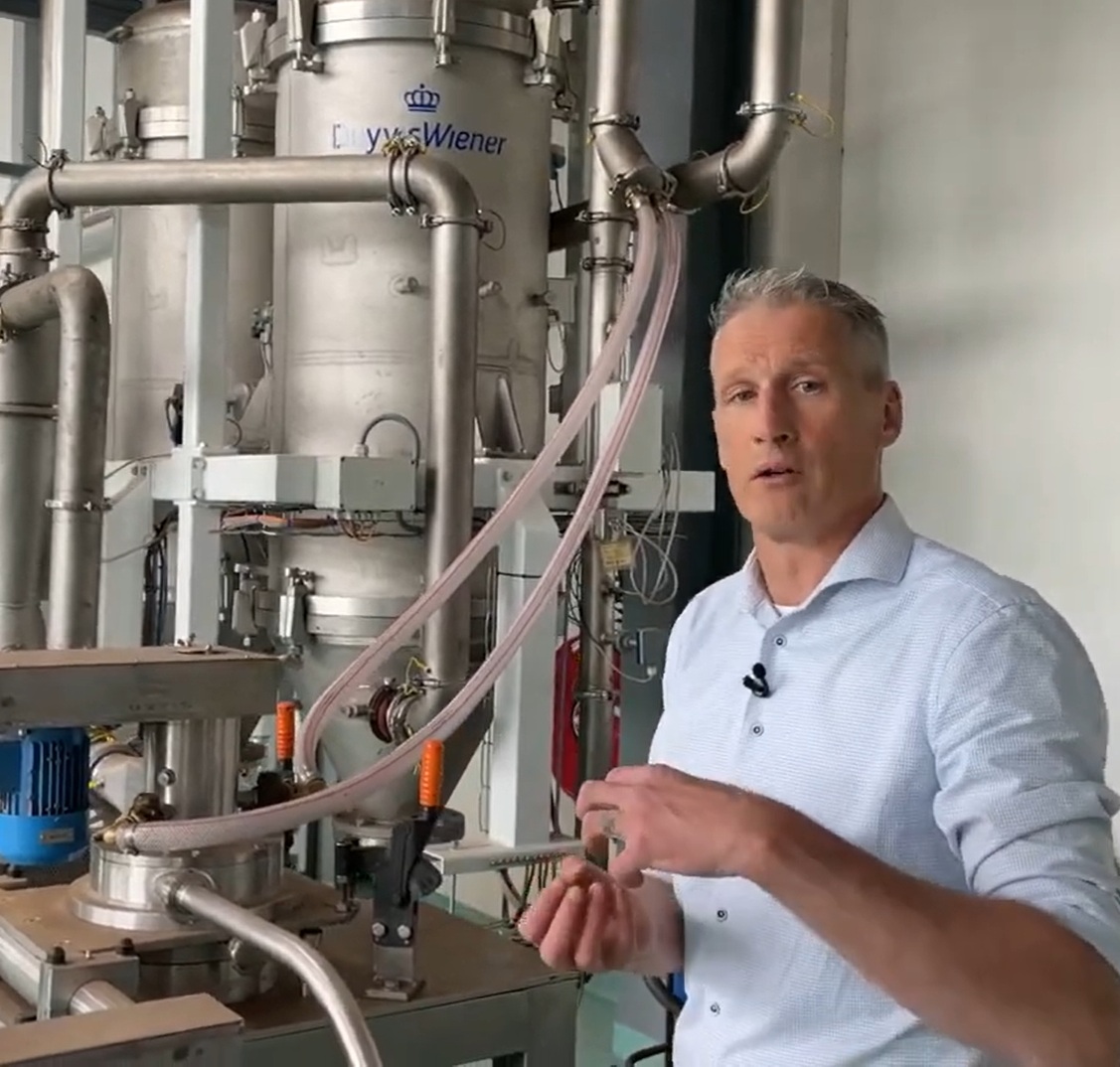
After pulverisation in a classifier mill, the cocoa powder temperature rises and the remaining fat becomes liquid. At this stage, the product is highly sensitive. As noted in operation, “by pulverization, you add energy… the temperature goes up… and this is what we need to stabilize.”
Instead of allowing uncontrolled crystallisation later, the process uses staged cooling and residence time to guide fat crystallisation under controlled conditions. In practice, this means cooling during pneumatic transport, followed by a defined holding time—“we leave it in there for 15 minutes… to crystallize before we have uncontrolled crystallization.”
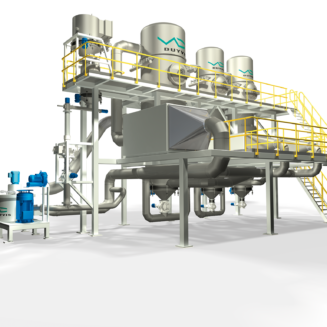
Systems such as the continuous stabiliser powder line from PROBAT integrate these steps inline, ensuring that stabilisation happens immediately after grinding, while the product is still under process control.
Verifying stability directly after processing
An important aspect of stabilisation is not just doing it—but knowing it worked. In practice, operators use a simple method to verify this: measuring the temperature rise of freshly produced powder in an insulated container.
The principle is straightforward: if residual crystallisation occurs, it releases heat. A stable powder shows minimal temperature increase. As defined in practice, “a two degree temperature increase will result in a stable powder.”
This type of check allows operators to confirm, within an hour, whether the stabilisation step has been effective—rather than discovering issues later in storage.
By integrating stabilisation into the process and verifying it immediately, producers can ensure that cocoa powder leaves the line in a stable, free-flowing condition.