Scaling suspension cell culture for cultivated seafood
If you’re working on suspension cultures, you know scaling is where things get real. Not because cells stop growing, but because the process becomes harder to control once volumes increase.
At Bluu Seafood, this challenge is central to their production approach. The company is developing cultivated fish products by expanding fish cell lines in suspension culture and transferring them into stirred tank bioreactors for controlled growth. The objective is to build a process that remains stable and reproducible as it moves toward larger-scale production.
Controlled cultivation environment
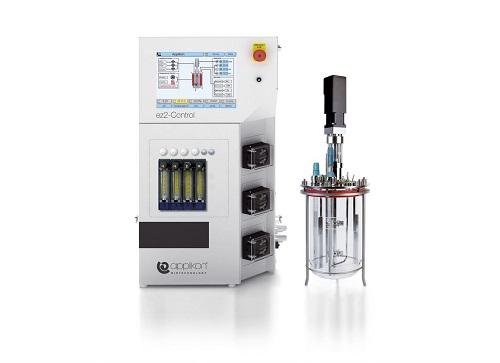
In suspension culture, cell performance depends strongly on maintaining stable environmental conditions. Stirred tank bioreactors allow continuous control of parameters such as dissolved oxygen, pH and nutrient availability, while mixing ensures homogeneous conditions throughout the culture. Integrated sensors provide real-time insight into cell growth and behaviour, supporting decisions on process control and harvest timing.
Bioprocess systems such as those from Getinge are used to maintain these controlled conditions in closed and sterile environments, enabling consistent cell expansion across cultivation cycles.
Adapting the process to increasing scale
For Bluu Seafood, the main challenge lies in translating early-stage cultivation into scalable production. As reactor volumes increase, mixing regimes, oxygen transfer and shear conditions change, directly affecting cell behaviour. Flexible bioreactor configurations allow process parameters to be adjusted as scale increases, helping cells adapt to new conditions while maintaining productivity.
This type of setup supports the gradual transition toward industrial-scale biomass production, where consistent and predictable cultivation becomes essential for supplying applications such as cultivated fish products.