Salt drying where corrosion is the real bottleneck
In salt production, drying is rarely just about removing moisture. The real challenge is keeping high-capacity lines running in an environment where corrosion, abrasion, and heat continuously attack equipment. For large-scale salt processors, unplanned downtime caused by wear is often more costly than energy itself.
Built for one of the harshest drying environments in industry
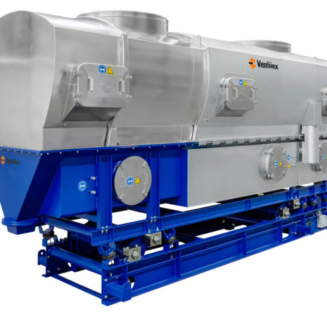
Ventilex developed its fluid bed salt dryers specifically for these aggressive process conditions. Unlike conventional systems, the Ventilex design combines corrosion-resistant construction with a gentle shaking motion that minimizes mechanical stress on both the salt crystals and the machine itself. As Ventilex notes, this motion is “extremely gentle,” reducing wear while maintaining uniform drying performance.
That matters at industrial scale: salt drying lines often operate continuously for long production campaigns, where even minor component erosion can trigger expensive shutdowns. By reducing internal wear, Ventilex extends service life while preserving throughput stability.
Lower energy costs at industrial scale
What makes this application especially compelling is the operating-cost advantage. Ventilex reports that its salt drying systems typically achieve 30–60% lower energy consumption than conventional drying technologies, partly by recycling excess heat from the cooling zone back into the drying process.
For salt producers processing thousands of tons per week, that creates a double return: less downtime in one of industry’s most punishing environments, and significantly lower energy cost per ton dried. In salt manufacturing, that combination is where real competitive margin is won.