How insect frass becomes a premium fertilizer product
Insect protein producers are discovering that their most overlooked by-product may be one of their most valuable revenue streams. Insect frass — the residual mix of substrate remains and larval excrement — is no longer treated as waste. With the right processing technology, it becomes a stable, pelletized fertilizer that fits directly into the circular economy model insect farming promises.
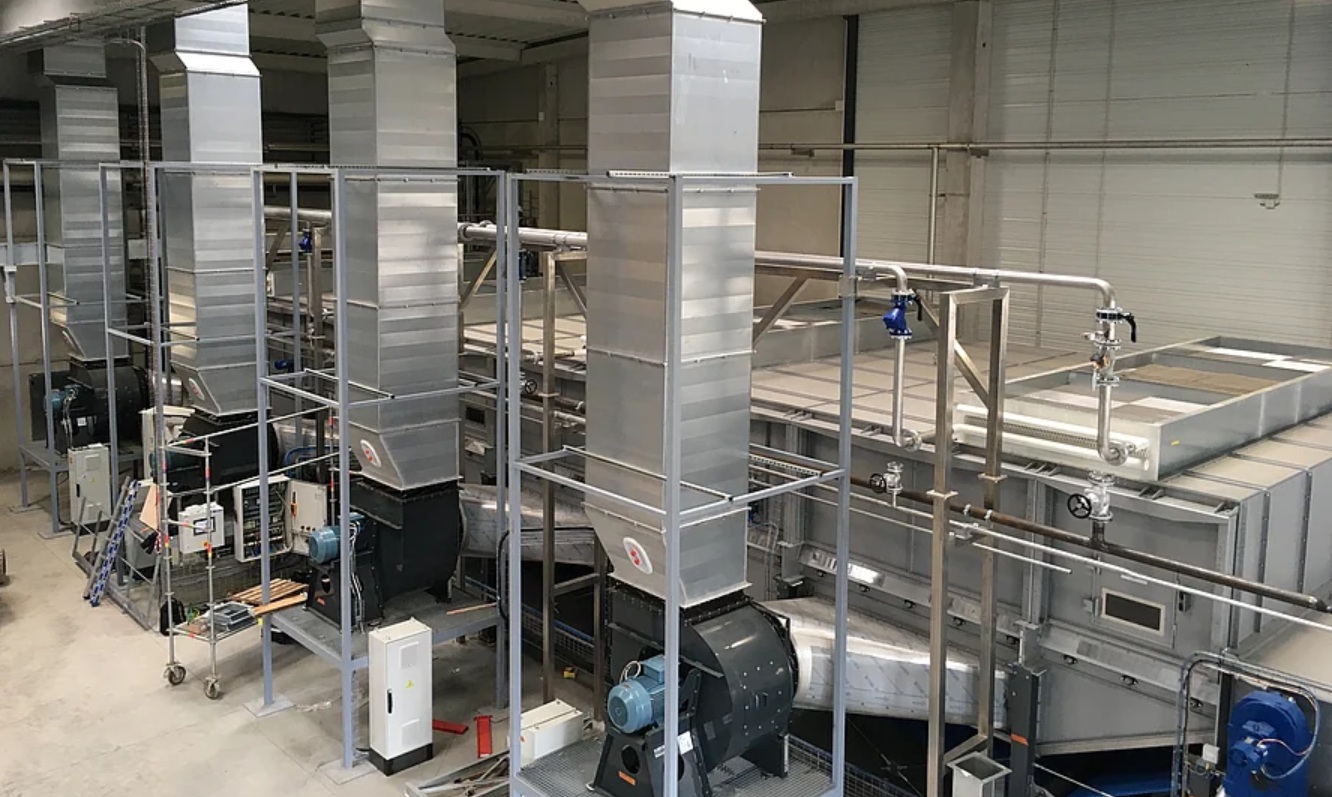
From residual stream to market-ready fertilizer pellets
At Innovafeed’s Nesle facility in France, insect frass generated during insect protein production is transformed into fertilizer pellets using AMANDUS KAHL technology. The process begins with drying in a KAHL fabric belt drier, where moisture reduction and dust filtration happen simultaneously — a critical step for handling frass efficiently at industrial scale. The dried material is then compressed in flat-die pellet mills into uniform fertilizer pellets suitable for storage, transport, and agricultural application.
What makes this project particularly compelling is its circular efficiency: larvae are fed on grain by-products from a neighboring starch plant, and the resulting frass is returned to regional farmland as nutrient-rich fertilizer. Instead of generating disposal cost, the residue becomes a saleable agricultural input.
The business case: higher value, lower waste
The finished pellets contain nitrogen, phosphorus, and potassium — key crop nutrients — while offering practical advantages for farmers such as higher bulk density, easier dosing, and uniform spreading in the field. For insect protein manufacturers, that changes the economics of by-product handling completely: waste disposal becomes product monetization.
As Innovafeed states: “Instead of disposing of our by-products, we can integrate them into a new production process and thus close the nutrient cycle.” That is the strategic significance of this application: KAHL is not simply pelleting frass — it is helping insect producers turn circularity into a commercially scalable business model.
Related equipment
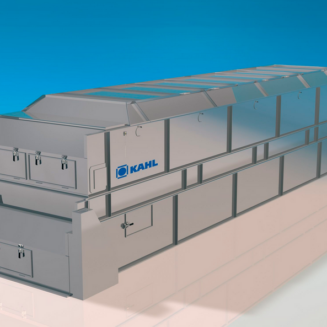
Belt dryer/cooler for pellets and granules
Many industries that process materials in pellet, powder, or crumble form need ...
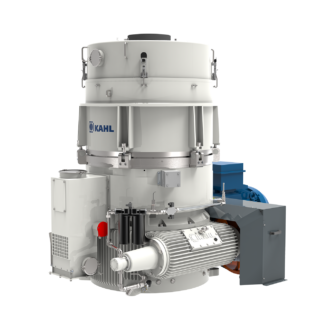
Pelleting press for biomass
Utilization of biomass for energy and other applications requires consistent and reliable compac...