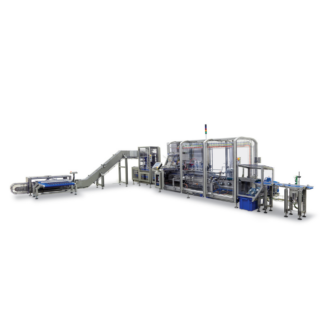
Carefully shooting frozen pizzas into boxes
In high-volume frozen food production, the constraint is rarely capacity. Lines can already run fast. The real challenge is what happens when you try to scale that speed with flat, fragile products—like frozen pizzas or similar tray-based meals.
At that point, small issues become structural. Products stick, slide, or deform. Cartons don’t close perfectly. And every interruption carries a cost—both in waste and in lost throughput.
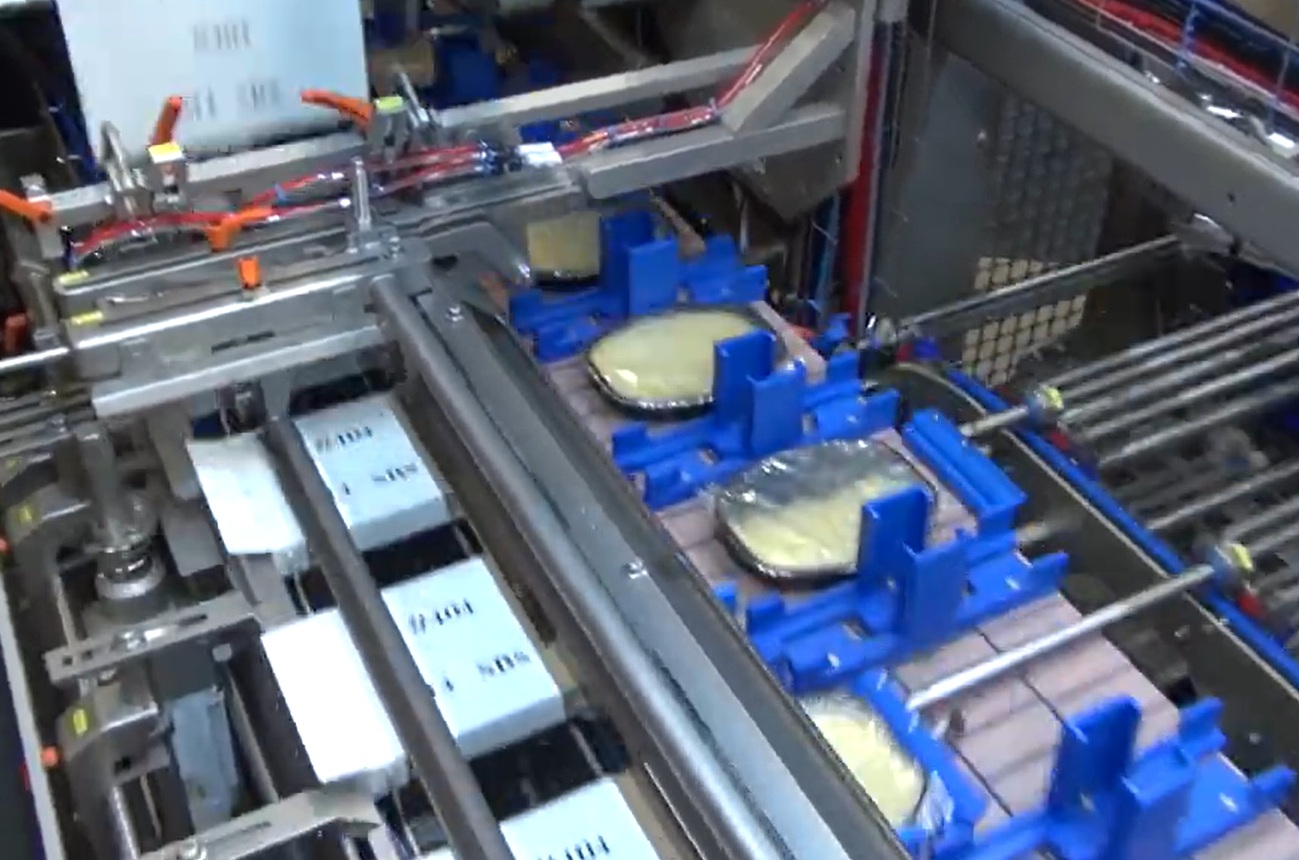
High-speed handling of flat frozen products
Solutions like the VENTO-c from Mpac Group are built specifically for that environment.
This is a side-loading, continuous motion cartoner designed to handle products such as shrink-wrapped pizzas or flat frozen meals, with speeds reaching up to 500 cartons per minute.
What matters here is not just speed, but how the product moves through the machine.
Flat frozen products are inherently unstable. They offer little structural rigidity, and any uncontrolled motion during transfer or insertion can affect both product integrity and carton quality. The VENTO-c addresses this through dedicated infeed systems, tailored to the specific product format, ensuring that products are guided and supported throughout the process rather than simply transferred.
The continuous motion principle reinforces this. Instead of stop-start handling, products move through the system in a steady flow, reducing mechanical stress and improving consistency at high speeds.
Where OPEX is really won or lost
In large-scale frozen food factories, performance is measured over time—not in peak speed.
The VENTO-c is fully servo-driven, with a robust stainless steel construction designed for long lifetime, low wear, and reduced maintenance effort. That directly impacts operating cost. Fewer mechanical adjustments, faster changeovers, and stable operation translate into fewer stops and less intervention.
At the same time, the system is designed for high overall equipment efficiency, maintaining consistent output even in 24/7 production environments where variation is unavoidable.
For producers running hundreds of thousands of units per shift, this is where the real gains are made—not in headline speed, but in sustained, predictable performance.