Avoiding contamination risk before the box is closed
For plant-based food producers, automation is often driven by speed. At The Livekindly Company, it started with something more fundamental: contamination risk.
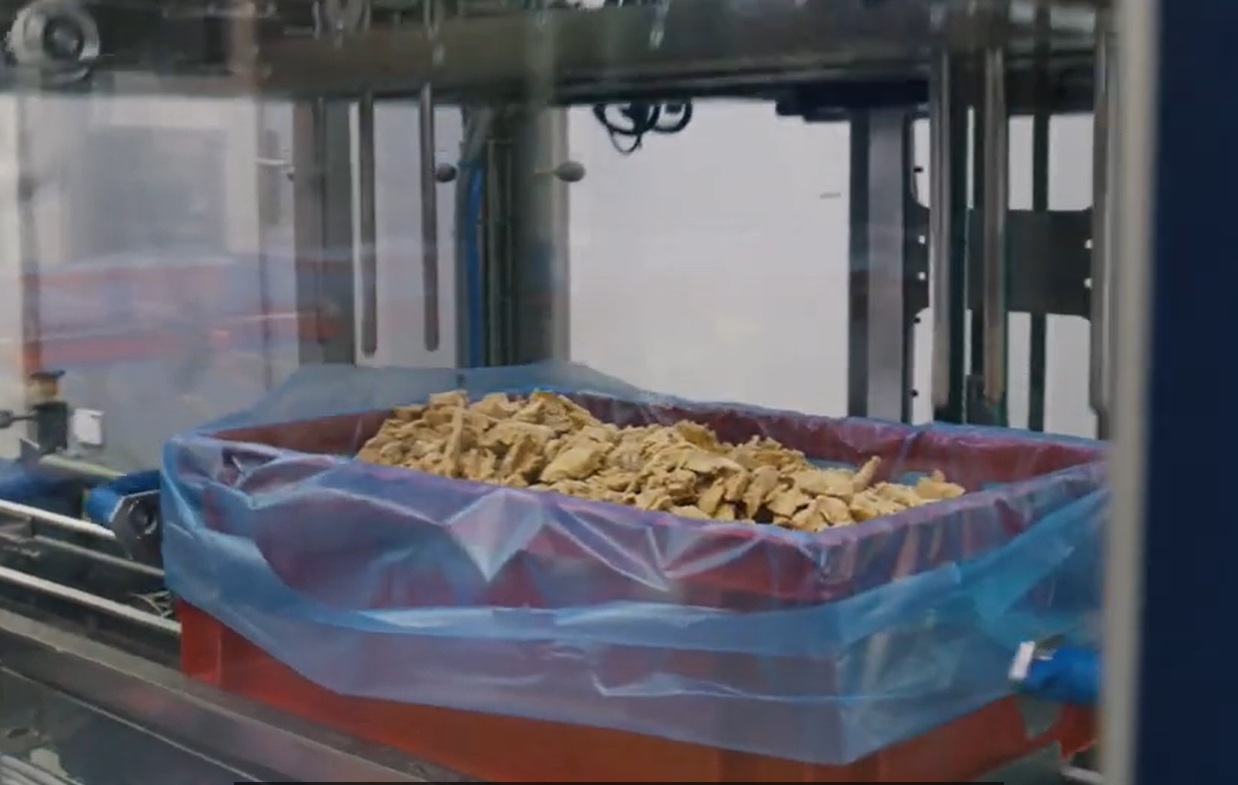
Their frozen soy- and pea-based chicken alternatives leave the freezer and enter the final packaging stage in bags. Until recently, that process still involved manual handling—placing bags into crates or boxes by hand, touching the inside of the packaging, and creating a contamination risk exactly where hygiene matters most.
At the same time, there was a second pressure point: labor. Could the same packaging work be done with fewer people, without slowing the line down?
Automating the critical handling steps
Together with Niverplast, the solution focused on the two manual operations that had the biggest impact on both hygiene and labor intensity.
The first step was automating bag insertion into crates and boxes using the EasyPlast system. This machine places bags automatically into the secondary packaging without operators touching the inner liner, removing a key contamination risk while standardizing the process.
The second step was sealing the bags with the EasySeal. In this case, the requirement went beyond simply closing the bag. The seal had to be secure enough for transport and storage, but also easy to reopen later in production without tearing the film. That balance between seal integrity and clean opening was essential for downstream usability—and was built directly into the line design.
From manual handling to continuous flow
What changed most was not just the individual tasks, but the way the packaging line now functions as a whole.
Instead of separate manual interventions, The Livekindly Company, created a continuous packaging flow in which bags are inserted, sealed, and moved onward in sequence. The result was a major reduction in manual labor: work that previously required around seven people can now be managed with only a fraction of that staffing level.
For manufacturers scaling plant-based frozen production, this is often the real tipping point. Automation is no longer only about speed or labor savings—it becomes the way to improve hygiene, process stability, and packaging consistency at the same time.
Related equipment
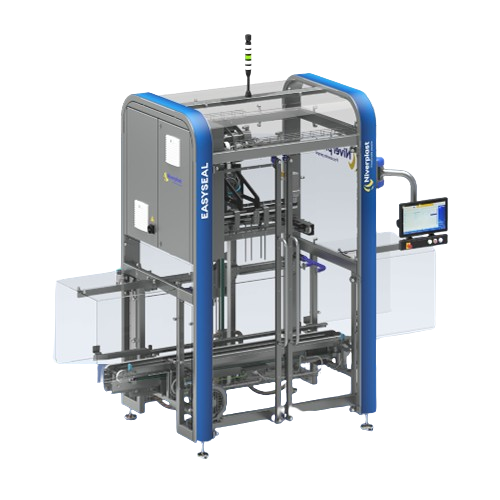
Automatic bag sealing system for packaging operations
Optimize your packaging efficiency with this high-speed sealing sys...
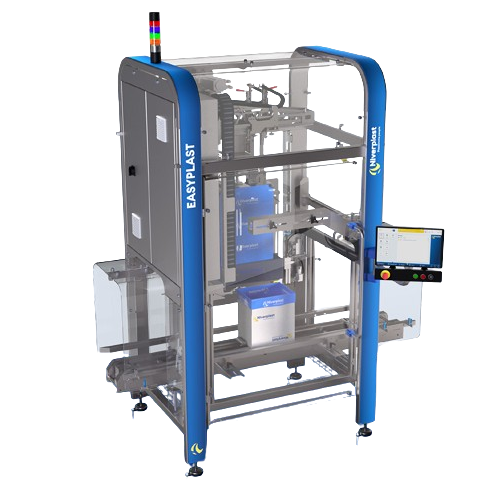
Automated bag placing solution for industrial packaging
Maximize efficiency with a versatile bag placing system designed ...