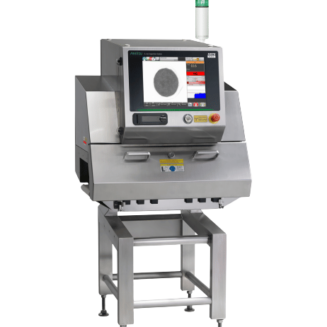
Why bakery inspection systems fail in places you would not expect
Anyone running a high-speed bakery line knows the challenge: products rarely look perfectly uniform once production starts at full capacity. Air pockets shift through bread, fillings move inside pastries, cookies overlap on conveyors, and fragile products break in ways that are difficult to detect consistently at speed.
That is exactly why bakery inspection has become far more application-specific than many factories initially expect.

Bakery products are unusually difficult to inspect
Unlike dense and homogeneous products, bakery products naturally vary in texture, shape, density, and moisture. According to Anritsu, these variations can make contaminant detection considerably more difficult because the system must distinguish between normal product variation and actual foreign material.
The challenge becomes even greater with:
- filled pastries,
- iced products,
- snack cakes,
- cereal bars,
- and multipack bakery products,
where manufacturers increasingly expect one inspection system to perform multiple quality checks simultaneously.
The inspection point has become a quality-control station
On many bakery lines today, X-ray systems are no longer used only to detect contaminants. They are also verifying:
- broken products,
- missing products,
- fill levels,
- package integrity,
- seal quality,
- and product positioning.
That shift changes what line managers should prioritize when selecting inspection equipment. Detection sensitivity still matters — but stable operation, low false rejects, hygienic design, and ease of cleaning often have a larger day-to-day impact on overall line efficiency.
Downtime is usually more expensive than contaminants
In practice, bakery factories often lose more production time from unstable inspection systems than from actual contaminant events. Flour dust, fats, sugar buildup, humidity, washdown procedures, and high conveyor speeds all place heavy demands on inspection equipment operating continuously across multiple shifts.
This is why newer X-ray systems increasingly focus on:
- simplified sanitation,
- lower maintenance requirements,
- reduced heat generation,
- longer component life,
- and more stable operation at high throughput.
For technical directors and plant managers, the conversation around inspection is therefore changing. The objective is no longer simply “passing food safety audits.” The real goal is maintaining consistent production flow while protecting product quality and minimizing unnecessary line interruptions.